
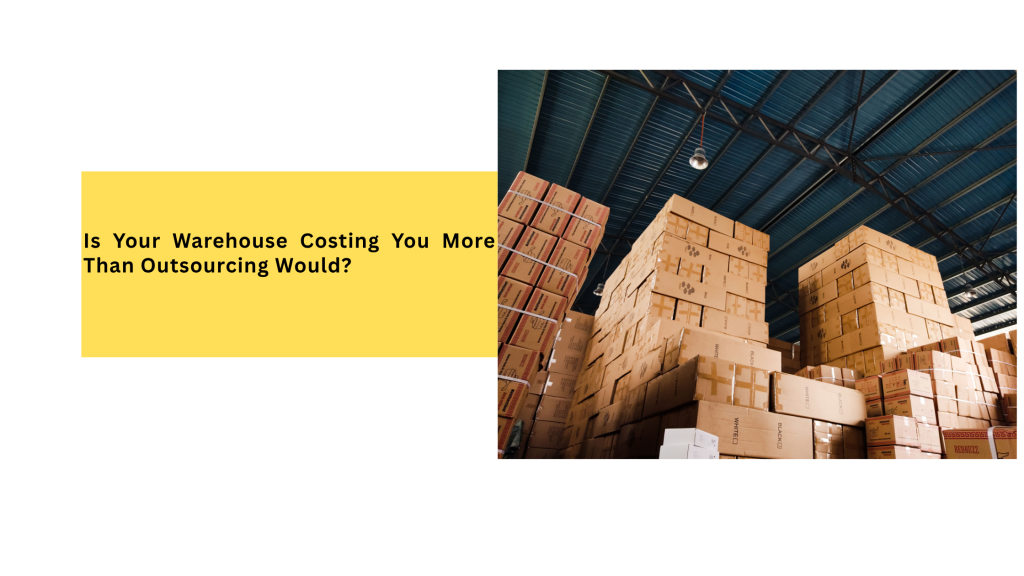
Running your own warehouse can feel like the sensible option. You have your own space, your own team and direct control over what comes in and goes out. But that control comes at a price, and the real cost of operating a warehouse is rarely as simple as rent plus wages.
As a business grows, storage requirements change, order volumes fluctuate and more time gets swallowed up by jobs that have very little to do with the business itself. At some point, it is worth asking whether keeping everything in-house still makes financial sense. For many businesses, outsourced warehousing offers a more flexible alternative.
The True Cost of Managing Your Own Warehouse
Fixed Overheads That Reduce Profitability
A warehouse creates costs whether it is full or half empty. Rent or mortgage payments, business rates, utilities, insurance, security and equipment all continue regardless of how much stock is actually moving.
Then there are people. Warehouse staff need salaries, training, management, holiday cover and the right equipment to do their jobs safely. Forklifts, pallet trucks, racking and loading equipment also need to be bought, maintained and eventually replaced. This can make maintaining your own warehouse storage surprisingly expensive, particularly when demand changes throughout the year.
Hidden Costs Beyond Rent and Staffing
Some costs are harder to spot because they appear gradually. Inventory systems need maintaining. Damaged stock has to be dealt with. Returns take time. Space gets used inefficiently. Managers end up solving warehouse problems when their attention could be elsewhere.
Growth creates another problem. If your existing building becomes too small, you may be looking at another lease, more staff and more equipment before the additional sales have even arrived.
What Is Outsourced Warehousing?
How Third-Party Warehousing Works
With third-party warehousing, another company provides the facilities, people and systems needed to store and handle your goods. Depending on the arrangement, that can cover receiving stock, inventory management, picking, packing, repacking, dispatch and distribution. Rather than building all that capacity internally, you use the infrastructure that is already there. This is one reason third-party logistics can work particularly well for businesses experiencing growth or unpredictable demand.
Contract Warehousing vs In-House Storage
Traditional contract warehousing can give a business dedicated capacity without requiring it to own and operate the entire facility itself. The important difference is where the operational burden sits. With in-house storage, the business carries the responsibility for the building, equipment, staffing and day-to-day management. Outsourcing shifts much of that responsibility to a specialist provider.
At Jager Freight, our warehousing and distribution services can also sit alongside transport and forwarding, rather than functioning as a completely separate part of the supply chain.
Signs It May Be Time to Outsource
You’re Running Out of Space or Flexibility
A busy warehouse is good. A warehouse so busy that stock is blocking working areas and every new delivery creates a reshuffling exercise, is not.
If you are repeatedly running short of space, using temporary overflow facilities or considering a larger building, flexible warehouse storage solutions may be worth comparing against the cost of expansion. This is especially relevant if you need additional capacity for only part of the year.
Seasonal Demand Is Increasing Your Costs
Peak periods can make warehouse planning awkward. You need enough staff and space to handle the busiest weeks, but that capacity can become an unnecessary expense once demand settles down. Flexible warehousing services allow capacity to respond more closely to what the business actually needs.
That flexibility can also extend beyond storage. Stock can move onwards through pallet distribution, domestic freight or express domestic delivery depending on how quickly it needs to reach the customer.
How Outsourcing Can Reduce Supply Chain Costs
Lower Operational Costs and Better Use of Resources
Outsourcing does not automatically mean every business will spend less. The useful comparison is between the provider’s price and the whole cost of running the operation yourself. That means considering property, labour, equipment, technology, security, maintenance and management time together.
It can also remove the need to invest heavily whenever the business changes. Instead of paying for additional infrastructure upfront, capacity can be adjusted around actual requirements.
Better Inventory and Distribution Efficiency
Good warehousing is about movement as much as storage. Modern warehouse management systems can improve stock visibility, while organised receiving, handling and dispatch processes reduce unnecessary delays. This becomes particularly valuable when stock is arriving from overseas or needs to move quickly to several UK destinations.
For international shipments, Jager Freight can connect storage with European road freight and air and sea freight. Where goods require clearance before entering the wider supply chain, our customs services can form part of the same process.
Why Integrated Warehousing and Logistics Work Better
Fewer Handovers Between Different Providers
One of the less obvious costs in logistics is fragmentation. When one company handles freight, another handles customs, another stores the goods and somebody else arranges delivery, every handover creates another opportunity for information to be missed or time to be lost.
Bringing these functions together can make planning much simpler. Jager Freight’s wider haulage services allow goods to move from storage into transport without starting from scratch with another provider. For imports requiring temporary customs-controlled storage, ETSF services can also help keep cargo moving away from busy entry points while clearance is completed.
Better Visibility Across the Supply Chain
Working with fewer providers also means fewer conversations to chase. When storage, freight and distribution are connected, it becomes easier to understand where stock is, what needs to happen next and who is responsible for it.
That visibility matters when a shipment is late, demand suddenly increases or a customer needs an urgent delivery. It is a practical advantage of choosing joined-up logistics services UK businesses can use as their requirements change.
Choosing the Right Warehousing Partner
Price matters, but it should not be the only question. Look at security, handling capabilities, stock management, transport connections and whether the provider has room to accommodate your future requirements. You should also know how easily you can speak to someone when plans change.
Jager Freight provides secure, scalable warehousing UK businesses can connect directly with domestic and international transport. Our facility is positioned close to London Gateway and major transport links, with 24/7 monitoring and logistics systems supporting stock handling and management. You can also explore our wider freight and logistics services if your requirements extend beyond storage.
Is It Time to Rethink Your Warehouse?
Owning or leasing your own warehouse can still make perfect sense. But it should be a deliberate business decision rather than something you continue doing simply because that is how things have always worked.
If space, staffing or distribution costs are starting to creep upwards, compare them against a flexible external setup. Speak to Jager Freight about your current operation, and we can help you work out a warehousing approach that fits the way your business actually moves.